
People call it one island. It isn't.
Ocean City runs about eight miles tip to tip, and the difference between a block in the Gardens and a block in the North End is not just geography — it's a completely different conversation about what a teardown makes sense, what a new build pencils at, and who the end buyer actually is. Ocean City, more than most Shore towns, rewards the people who treat it as three distinct markets stacked on top of each other rather than one uniform opportunity.
Here's how those segments actually behave, based on public transaction data, municipal records, and what listing patterns reveal.
The Gardens: Slower Burn, Stronger Hold
The Gardens — roughly 59th Street and north into the 80s — is the quietest part of the island. Wider lots in places. More year-round density. The housing stock skews older, a lot of it mid-century construction that was never elevated, never modernized, sitting on crawl spaces that have seen more water than they should have.
Buyer profiles in the Gardens tend to differ from the Boardwalk-oriented crowd further south. They want the town. They want walkability to Asbury and the bay side. They want the feel of a neighborhood that has some history to it. That matters when thinking about what to build, because a stripped-down spec box that might move fast in a more transient market can sit longer here if it doesn't fit the block.
The teardown math in the Gardens has shifted. Older cottages that would have been overlooked five years ago are now getting real attention — not because the land values spiked overnight, but because the cost of a meaningful renovation on a pre-code house often closes the gap with what a full demo and build runs. That's a calculation worth sitting with before deciding anything.
One honest note: the Gardens also has more unknowns underground. Older streets, older utilities, properties that were added onto in ways that weren't always permitted. These properties often need a deeper look at what's been done to them over the decades. If the house went up before modern flood standards existed, that history matters more than most people realize.
Central Ocean City: The Clearest Demand Signal
Roughly 34th down through the 50s. This is where teardown activity has been most consistent — Ocean City's demolition permits confirm the concentration — and where the market signal is most straightforward to read.
The blocks are established. The buyer profile is more predictable — families upgrading from rentals, investors looking for rental yield plus eventual appreciation, people who want to be close enough to the Boardwalk without being in the thick of it. When a mid-century cape on a standard 50x100 lot comes available in this stretch and the structure is genuinely past its useful life, the replacement conversation starts almost immediately.
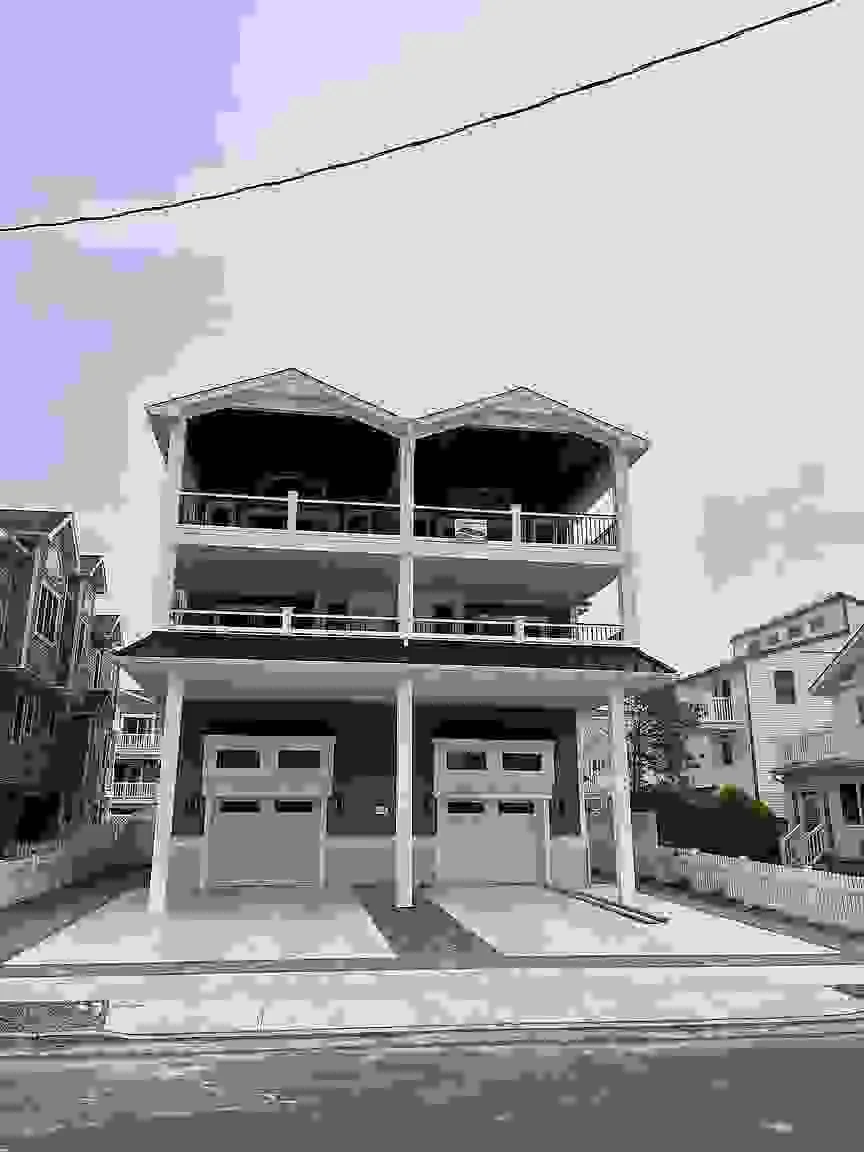
New construction here tends to perform well when it respects the rhythm of the block. Engineered hardwood throughout, composite decking on outdoor spaces, quartz countertops — those finishes read as quality to the buyers shopping in this range, and they tend to be buyers who have done their research. Plywood cabinet boxes hold up better than particle board over time in shore environments. Warm-tone LVP works well in specific rooms depending on use.
(The honest friction here: Central Ocean City also has the most competition. More developers watching the same blocks, more owners who know their land is worth something. The easily identifiable teardown inventory in this corridor has shrunk considerably. Properties that are clearly under-improved are getting multiple conversations before they're even listed.)
Base flood elevation plays a big role in what a new build here can actually look like, and it affects the finished product's insurance picture too — something buyers in this range are increasingly asking about before they close. Shore home insurance has changed enough that it's now part of how buyers are underwriting their purchase.
The North End: Different Question Altogether
Below 10th Street, the context shifts completely. The North End — especially as you approach the Inlet — has a different land story, different lot configurations in places, and a buyer profile that tends to be further up the income spectrum. Proximity to the music pier, the Boardwalk's southern anchor, downtown restaurants. It's the part of the island that feels most like a resort and least like a neighborhood.
Teardown opportunities here are less frequent. The ownership tends to be older and multigenerational — families who have held these properties for decades and aren't in any particular hurry to do anything with them. When a property does become available for redevelopment, the build expectations are higher. Larger footprint where the lot supports it. Front porches when the overhang allows. More attention to outdoor living, space permitting.
Joint venture conversations about North End properties tend to be more complex. Not because the JV structure changes — Redfern typically works 25% to 50% of net profit, structured per deal, with an approximate timeline of six months from demolition to sale-ready — but because the owners themselves are often navigating something more loaded than just a financial decision. There's a whole layer of family decision-making underneath the real estate question that doesn't show up in the numbers.
Owners of aged properties in this corridor also benefit from being clear-eyed about what holding costs and missed improvement windows actually mean long-term. A common pattern is waiting too long to have the conversation.
So Which Part of the Island Are You Actually In?
This matters more than people admit upfront. An owner with a 1958 cottage in the Gardens is facing a different set of decisions than someone with a structurally similar house two miles south. The buyer is different. The comparable new construction is different. The case for a joint venture versus a private sale versus a traditional listing is different. If you're weighing those options, the private sale path has its own logic worth understanding.
Redfern Ocean Development is a family-owned company that buys older homes and lots as-is in Ocean City. Jim Colahan leads and personally coordinates every project. Redfern evaluates properties based on block, orientation, lot dimensions, existing structure, and recent comparable sales in that specific corridor.
That cottage on a quiet Gardens street, the one with the cedar shake that's been recoated three too many times, the back addition that doesn't quite match — the family sitting on it may be closer to a decision than they realize.
If you have a property in Ocean City — any part of the island — reach out to Redfern Ocean Development. Tell us what you have. We'll take a real look.