
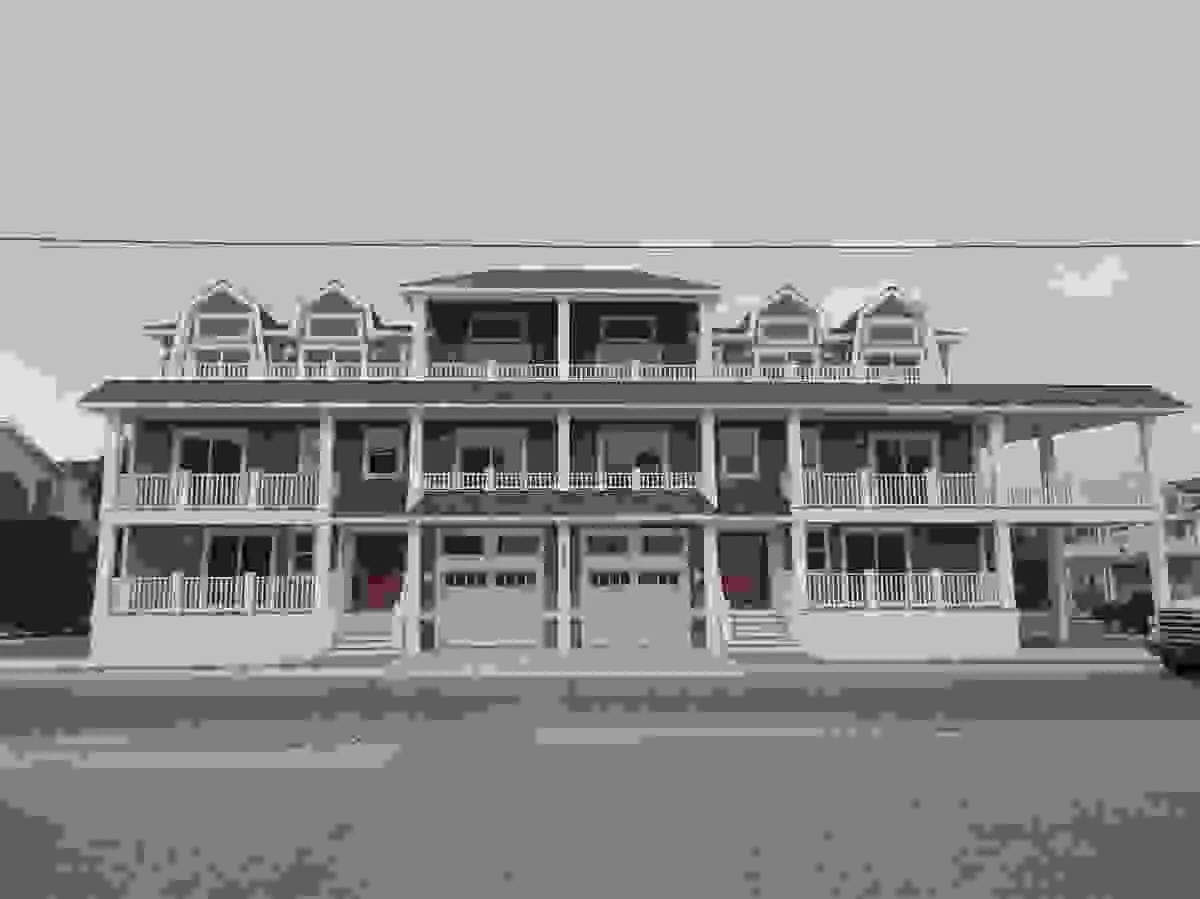
The question shows up in almost every conversation we have with owners who've been sitting on an older shore home for a few years, watching their insurance statements get worse and their neighbors start lifting.
Should we elevate?
It sounds simple. It is not simple. And the range of answers circulating — on Facebook groups, at block association meetings, in contractor estimates that vary by $80,000 — is genuinely unhelpful to anyone trying to make a real decision about a real property. So here's what the data and industry experience actually show, and what I'd tell a neighbor if they asked me at the coffee shop.
What Elevation Actually Costs at the Jersey Shore
Let me give you numbers that are real without pretending I can quote your specific project.
Elevation costs vary widely by structure size, foundation type, and site conditions. The structural lift itself is one number. New foundation work, utility disconnects and reconnects, permits, the access stairs that FEMA compliance now basically requires, and any interior work disturbed in the process are separate line items that add up fast.
For a larger two-story home, the all-in number climbs further — especially when owners replace HVAC, electrical panels, and plumbing runs at the same time, because once a crew is that deep into the structure, it makes sense. Get three contractor quotes specific to your property before budgeting.
The honest answer is that most owners get their first estimate and experience some version of shock. That's not the contractor being unreasonable. That's just what it costs.
(The other thing that surprises people: elevation alone doesn't automatically get you to whatever the new BFE requires — you may need to overshoot the minimum to actually move the needle on flood insurance, and that changes the scope of the project before you even start.)
Timeline and Permitting — Neither Is Fast
Three to six months is a reasonable planning window for a straightforward lift project, assuming permits move at a reasonable pace.
Permits do not always move at a reasonable pace.
Municipal offices at the shore are understaffed relative to the volume of elevation and rebuild applications they've been processing since Sandy, and that hasn't fully resolved itself. Some towns are faster than others. Some owners have waited eight weeks for a permit approval that should have taken three. Faster timelines occur. What rarely happens is anyone rushing a coastal construction permit.
The permitting process requires a licensed engineer's survey confirming your existing elevation relative to BFE, drawings showing the proposed finished floor height, and in many cases a floodplain development permit separate from your standard building permit. If your property is in a V-zone rather than an AE-zone, the requirements get more complex. Some municipalities require LOMA review. Some want coastal zone certifications. It stacks.
Plan for the longer end. If it goes faster, great. But owners who assume a 10-week turnaround and make summer rental commitments around that schedule are the ones who end up in difficult situations.
Here's where I'll contradict myself a little: I've been leaning into the complexity of this process, and it is genuinely complex — but I also don't want to overstate it to the point of scaring people off an elevation that might be exactly the right call for their property. Plenty of owners navigate this without it becoming a disaster. The ones who do it well hire an experienced local contractor who has done coastal elevation work specifically, not general contractors who've pivoted into it because the work is available.
When It Actually Makes Sense
This is the part nobody wants to give a straight answer on. I'll try.
Elevation makes financial sense when the gap between your current annual flood insurance premium and what the premium would be at compliant elevation is large enough to justify the upfront investment over a reasonable holding period. If you're planning to sell in two years, the math is almost never there. If you're planning to hold the property for ten years or pass it to your kids, it gets more interesting — especially given where shore home insurance premiums are heading.
It also makes sense when your home is a candidate for elevation rather than replacement. A structurally sound 1980s construction with good bones, no major rot, no foundation issues — that's worth lifting. A 1950s cottage with knob-and-tube wiring, failing piers, and a footprint that doesn't conform to current setbacks is often better demolished and rebuilt than lifted. The lift cost can approach or exceed the cost of a new build, and you end up with a compliant foundation under a 70-year-old house that still needs a full renovation.
Understanding what BFE actually means for your specific lot is the starting point for any of this analysis. Without that number — your lot's current base flood elevation and what FEMA has mapped for your zone — you're guessing.
The owners who make the worst decisions are usually the ones who skip the survey, get a contractor estimate based on assumed elevation, and commit to a scope before they know what they're actually working with. That's a pattern worth reading more about here.
What We See on Properties We Evaluate
We look at a lot of older shore properties. When an owner comes to us with a non-elevated home that's a JV candidate or a straight acquisition, elevation compliance is one of the first things we factor into the analysis. Not because it's a dealbreaker — it often isn't — but because it directly affects what a post-renovation home will carry in annual insurance costs, and that affects resale value in a way buyers are increasingly paying attention to.
Buyers in the $700,000-and-up shore market right now are asking about flood insurance costs early in conversations. That wasn't true five years ago the way it is now. It's changed the calculation on what a compliant, elevated, post-build home is worth relative to an older structure sitting at original grade.
If you're trying to figure out whether a property makes more sense to elevate and hold, sell privately as-is, or JV into a new build — those are genuinely different answers depending on the lot, the structure, the zone, and your timeline. Selling privately is one path. A joint venture, where we'd split net profit typically 25% to 50% depending on how the deal is structured, is another. We can close in as little as 10 days or work around your schedule.
There's a 1970s bi-level I keep thinking about — sitting at grade on a flood-prone block, owner asking whether to lift it, sell it, or do something different entirely — and the answer depends entirely on one survey number they haven't pulled yet.
Have you confirmed your current elevation relative to BFE?