
The question owners of aged single-family homes keep asking, in different words, is the same: is my block moving yet, or am I early? It comes up constantly, and there's never a clean answer because the honest version is: it depends which end of the street you're on, what year your house was built, and whether the lot next door just sold.
So here's what I'm actually seeing. Not projections. Not a market outlook. Just the pattern from being at these houses every week.
The Blocks Getting Hit First
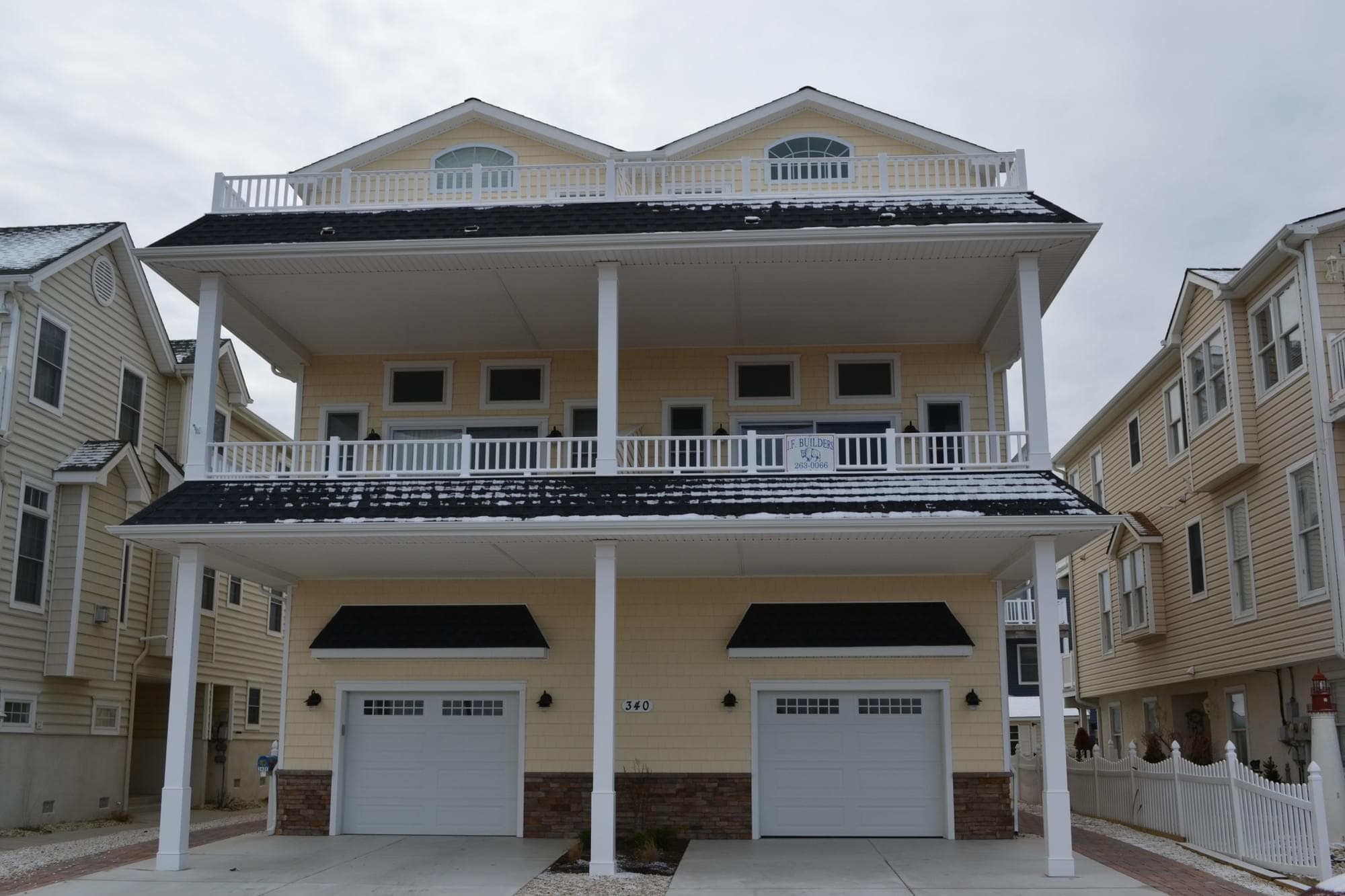
The heaviest teardown activity right now is concentrated between 38th and 52nd Streets, roughly the center of the island. Specifically the blocks closer to Landis Avenue on the bay side have been moving faster than people expect. A typical 50s-era cottage on a block like 44th or 46th — the kind with a shallow setback, an original roof, and a crawl space that floods in a moderate storm — those are the ones getting priced for land value, not livability.
Buyers aren't even opening the door on some of them.
What's driving it there specifically is a combination of lot depth, the zoning permitting duplexes in a lot of that corridor, and the fact that newer construction has already started to cluster. Once two or three new builds go up on a block, the math on the remaining cottages shifts. The comps change. The land value floors out at a higher number. Owners who were waiting to see what would happen — they're watching it happen now.
The 58th to 63rd Street range has been picking up too. Different feel up there. The lots tend to be a little more consistent, the street patterns cleaner. Owners in that block range tend to ask about duplex conversion more than full teardown, probably because some of the structures are newer — late 70s, early 80s builds that aren't falling apart but still can't pencil as rentals in their current footprint. Converting a single-family shore home into a duplex is a conversation we're having more on those upper blocks than anywhere else right now.
Worth knowing: zoning isn't uniform across the island. There are pockets where duplex construction is permitted by right and pockets where it isn't. If you don't know which district your property sits in, that's not a minor detail — it's the whole question. Sea Isle's zoning districts and where duplexes are permitted is something I'd look at before assuming anything about what a buyer can actually build.
Where It's Slower — And Why That Matters
Here's the part that complicates the clean narrative: the oceanfront and near-oceanfront blocks between roughly 20th and 35th Streets are not moving at the same pace, and it's not because there's less interest.
It's flood zone exposure.
A lot of that lower stretch sits in VE zones or in AE zones with base flood elevations that make renovation math brutal. The 50% rule under FEMA's substantial improvement threshold catches owners off guard constantly. You buy something for land value, you think you're going to rehab and hold, and then you find out that any permitted work over half the structure's assessed value triggers a full bring-to-code requirement. At that point you're not renovating. You're rebuilding. Which changes the whole underwriting.
(I'll be honest — there are buyers who know exactly how to work in VE zones and they're not scared off by this. But for the average buyer circling Sea Isle for the first time, that exposure is a real friction point. The insurance costs alone can kill a deal that looks good on paper. What AE vs VE actually costs you in Sea Isle City is worth reading before you make assumptions about those lower blocks.)
So yes, there's activity down there. But it's more selective. The buyers moving on those blocks know what they're doing or they're working with someone who does.
The blocks I'd watch most carefully for the next 18 months are actually in that 40th to 55th range, bay side, two to three blocks off the water. Lower flood exposure in most cases. Zoning that permits density. And enough new construction already completed nearby that the transition is visible, not theoretical.
What Owners on the Fence Are Actually Asking
This comes up a lot: should I list, or is there another way to approach this?
It's a fair question and there's no universal answer. An aged shore cottage on a hot block is not the same as a listing problem — it's a land problem, and the MLS is a weird place to solve a land problem. The quiet cost of putting an aged shore home on the MLS gets into this in more detail, but the short version is that public listing creates visibility for a product that sophisticated buyers are already tracking privately. Sometimes that works out. Sometimes it just creates days on market that follow the property.
Owners who've inherited a property are in a slightly different position. The carrying costs, the family dynamics, the deferred maintenance — all of it tends to accelerate the timeline in ways that don't always align with getting top value through a traditional sale process. How to sell an inherited shore home without putting it on the MLS is probably the most relevant read if that's the situation.
For owners who want to participate in the upside rather than just sell the land cheap, the joint venture question comes up on the better blocks more than it used to. I'm seeing it specifically in that 44th to 52nd Street range where the land is clearly worth developing but the owner isn't ready to just cash out. How a shore joint venture actually works breaks down what that structure actually looks like — not the pitch version, the real version.
I want to be clear about something: I'm not saying every owner should pursue a JV. The right structure depends on your basis, your timeline, your tax situation, and frankly whether you can stomach a process that takes longer than a traditional sale. Joint venture vs. outright sale is worth reading side by side before landing on an approach.
The Map Nobody's Published
The honest version of a Sea Isle redevelopment map in 2026 looks like this: a dense cluster of activity in the mid-island corridor between 38th and 55th, heavier on the bay side than the ocean side in that range, a slower but real second wave starting to push up into the upper 50s and low 60s, and a more complex picture on the lower ocean-facing blocks where flood zone exposure creates a two-tier buyer pool.
That's not a bullish take or a bearish take. It's just the pattern.
On blocks where multiple new builds have already gone up, the remaining older homes are sitting on land that the market has already repriced. The question is whether those owners know it.
---
If you own a property in Sea Isle and you're trying to figure out where you stand on the redevelopment curve, reach out to Redfern Ocean Development. We'll tell you what we're actually seeing on your block.