
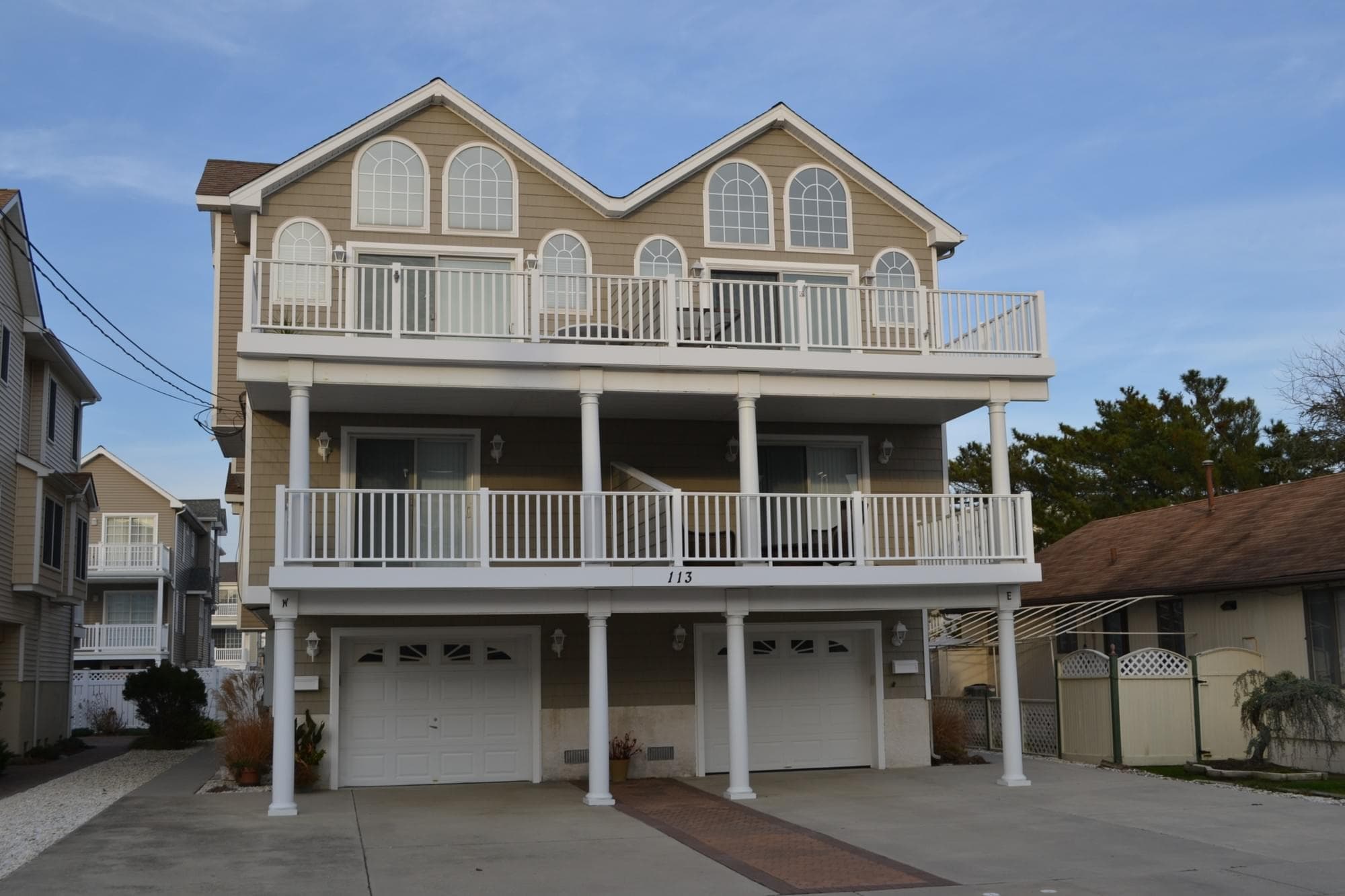
Most buyers walk in thinking they already know what they want.
By the second showing, they've usually talked themselves out of it. Not because the house changed — because the house made them feel something they weren't expecting, and now they're recalibrating in real time, standing in someone else's kitchen, trying to figure out why the math that made sense on paper doesn't feel right anymore.
Spending time in shore homes during the season reveals consistent patterns: the head and the gut are rarely looking at the same property.
The Rational Case Falls Apart Fast
Buyers who come in analytically — and plenty do — usually start with a spreadsheet logic. New construction costs more per square foot. Renovated is cheaper entry. If the renovation is done well, you get most of the benefit at less cost. Clean conclusion.
Except they get inside a fully renovated 1950s-era cottage on a mid-block Sea Isle street — the kind with low ceilings, a modified floor plan that's trying hard but still reads like a renovation — and something shifts. The rooms feel like rooms. Not like a floor plan. And that either works for them or it doesn't. There's no spreadsheet for that.
New construction solves a different problem. You're buying decisions. You're buying the absence of someone else's choices embedded in the walls. Buyers who've owned older shore homes before — families who've dealt with the slow accumulation of deferred maintenance, the mystery of what's behind the sheathing — they tend to put a price on that. Not always consciously. But it shows up in how quickly they move.
Owners in that 40s-to-60s-build range tend to ask us: "Is the renovation enough?" And what they're really asking is whether the buyer they're hoping for will see the house the way they do — as a solved problem — or as a problem that's been managed.
That's a real distinction.
What the Emotional Math Actually Looks Like
Here's the thing I'd push back on in my own argument: new construction isn't always the clean win buyers think it is either.
Consider a newly built 4-bedroom reverse-living home in Stone Harbor — tight lot, open floor plan that's technically correct but feels a little corporate, builder-grade finishes dressed up with some nice tile — and you'll sometimes see them go quiet. Not the good quiet. The quiet of someone doing arithmetic. They're calculating whether the price premium actually bought them what they thought it did. (The answer depends almost entirely on the finish level and how the outdoor space was handled, which is its own conversation entirely — one we get into over at The Outdoor Living Hierarchy.)
Renovated homes carry narrative weight. That's not always bad. A well-executed gut renovation on a block that's been turning over — where the neighboring lots have already gone new construction — can feel like the more interesting option. Buyers sometimes want the story. They want to tell people at the end of the summer that they found the one that didn't look like everything else.
What breaks that feeling is finish inconsistency. If the kitchen is excellent and the bathrooms are dated, the buyer's brain fills in the worst-case version of every other unknown. It doesn't matter that the mechanicals are new. They're already mentally budgeting for the bathroom they'll have to do in year two.
This comes up a lot with families who are stretching to get into a market at the top of their range. They'll accept a renovation — sometimes prefer it — but their tolerance for uncertainty is low. One soft spot and they're gone.
The Timeline Question Nobody Asks Until It's Too Late
New construction buyers almost always underestimate the decision fatigue. Not the build itself — the decisions before the build. Selections. Materials. Layout calls. That process is real work, and not everyone is built for it. We talk about that in detail in Design Selections Without Losing Your Mind, because the number of deals that go sideways over specification decisions is higher than anyone admits publicly.
The buyers who do best with new construction are the ones who've been through it before — or who are honest with themselves about how they make decisions under pressure. If they're the type to second-guess a tile choice for three weeks, the process is going to be hard.
Renovated homes compress that timeline. You see it, you decide. What you see is what you're buying, more or less. For buyers with limited bandwidth — families in the middle of life, not the beginning — that's not a small thing.
On the development side: when Redfern structures joint ventures with property owners and takes a project from demolition through a finished new build, the window is approximately 6 months from demolition to sale-ready. That's tighter than most people expect. The buyer who was looking at renovated homes in April is sometimes looking at completed new construction by fall. The market doesn't always give you clean lanes.
For buyers evaluating materials and what actually survives down here versus what looks good in a showroom, Material Choices That Survive Shore Conditions is worth reading before you finalize anything. Same with The Finishes That Shore Buyers Actually Want in 2026 — because what photographs well and what actually holds up in a shore environment are not always the same thing, and renovation sellers who don't know the difference are leaving money on the table.
One thing that doesn't get said enough: the buyer's agent matters enormously here.
A good buyer's agent who knows the block — who can tell you whether the renovated house on the corner is an outlier or the leading edge of a neighborhood shift — changes the calculus completely. The analysis we do from the development side is different from that, but they're not competing. They're answering different questions.
---
The buyer standing in a gutted-and-rebuilt two-story on a Stone Harbor lagoon block, holding their coffee, looking out at the water through a wall of impact glass they didn't have to spec themselves —
That moment is what new construction is actually selling. Not square footage.
If you're weighing a shore property decision — buying, selling, or exploring a joint venture on a property that might be a candidate for development — reach out to Redfern Ocean Development. We can close in as little as 10 days, or on your timeline.