
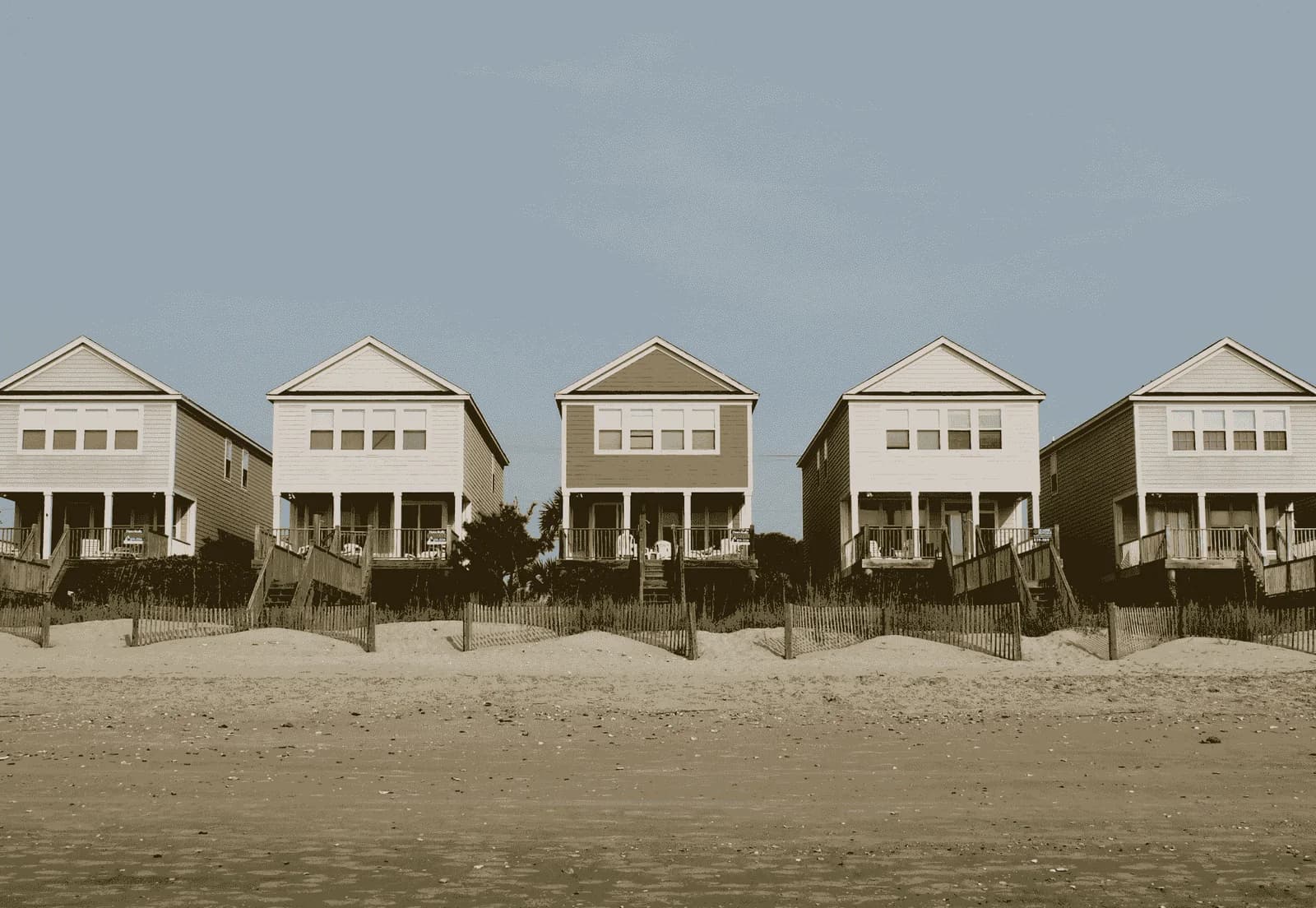
The buyers standing in the driveway aren't the same people who were standing there five years ago.
I don't mean that philosophically. I mean it literally — the age, the income structure, the way they're financing, the questions they ask before they even walk inside. Something shifted. And if you're building, renovating, or pricing a property in Cape May County right now without accounting for who's actually showing up, you're guessing.
This pattern is visible in listing data and buyer behavior across the county. And the picture that's emerging is specific enough to be useful.
The Demographic Shift Is Real, And It's Not One Group
The dominant buyer type a decade ago was late 50s, either already retired or close enough that it was the primary frame. Selling the primary residence, pulling equity, buying a shore house they'd eventually retire into full-time. That buyer still exists. But they're no longer the whole story.
What we're seeing more of now is the 38-to-52 range. Dual income. Usually at least one remote or hybrid work arrangement, sometimes both. Kids either in middle school or just out of the house. They're not buying a retirement property. They're buying a place they actually intend to use year-round, or close to it — long weekends in October, spring breaks, summer blocks.
That changes everything about what they want in a house.
The "weekender" buyer of 2016 could tolerate a tight galley kitchen because they were eating out most nights anyway. This buyer is cooking. They want counter space. They want a functional pantry. They want the outdoor kitchen to actually work, not just be a gas line stubbed out under a pergola.
Owners in that mid-career bracket tend to ask about internet infrastructure before they ask about appliances. That question — "what's the connectivity like?" — comes up constantly now. Not just from remote workers. From parents whose teenagers will mutiny if the WiFi drops on a rainy Tuesday in August.
Budget Ranges and What They're Willing to Trade Off
Here's where it gets complicated, and I'll be honest about something inconvenient: the price sensitivity in this market is higher than people on the selling side want to admit.
Yes, Cape May County has strong demand. Yes, inventory is tight in certain pockets. But this 2026 buyer is not buying emotionally. They've watched rates, they've run numbers, and they have a ceiling — and that ceiling is often harder than it looks from the outside.
Buyers looking at newer builds are typically comfortable with the price but deeply focused on what they're getting per square foot. That leads directly to conversations about finishes, lot depth, and parking. (Not parking as an afterthought — parking as a genuine deal consideration, especially on narrower blocks where the lot doesn't accommodate a second car without friction.) If you want to understand what finishes actually move the needle, The Finishes That Shore Buyers Actually Want in 2026 (Not What Instagram Shows) is worth reading before you make selection decisions.
Buyers looking at older stock or smaller footprints are doing math on renovation costs with real skepticism. They want to know the number before they commit. If that number surprises them at inspection, they walk. It happens more often than sellers expect.
Above $1.8M, the buyer profile shifts again. Less rate-sensitive. More focused on location specificity — a particular block, a particular view corridor, proximity to the water as a non-negotiable rather than a preference. That buyer tends to have strong opinions about outdoor living before they have strong opinions about interior square footage. The Outdoor Living Hierarchy: Decks, Porches, Pools — What Shore Buyers Prioritize maps that out in a way that's actually useful if you're building or renovating in that price range.
What They Ask About That Didn't Used to Come Up
The lifestyle priorities have reorganized.
Primary bath. It matters more than it did. This comes up at showings constantly — buyers spending real time in the primary bath, asking about storage, asking about the shower size, treating it like a deal criterion rather than a nice-to-have. Bathroom Hierarchies in Shore Homes: Which Ones Matter and Which Don't gets into the logic there, and the short version is: the ranking has changed.
Floor plan flexibility. The open-concept-versus-defined-rooms question is actively alive with this buyer. The family with kids who works from home needs a room that closes. The couple in their mid-40s with a large friend group wants the kitchen to flow into the living space. These aren't opposing preferences — they're different buyers with real opinions. Open Floor Plans vs. Defined Rooms: What Works in a Shore Home lays out where the balance tends to land.
Material durability. The buyer who's going to use a property hard — actually be there, actually cook, actually bring the dog — is asking about material choices in a way that the occasional-weekender never did. They want to know what survives. What doesn't. What looks good for three seasons and starts failing in year four. Material Choices That Survive Shore Conditions (And Ones That Don't) is probably the most practically useful thing we've published for anyone making those decisions.
And then there's the new construction question. More buyers than ever are open to it — not because they love construction timelines but because they're tired of buying a property that needs everything immediately after closing. The calculus has shifted. If you're thinking about that angle, New Construction in Sea Isle City: What to Know Before You Build (2026) is a good starting point for understanding what that process actually looks like from a builder's perspective.
One thing I keep coming back to: this buyer is more research-literate than previous buyer cohorts.
They've read. They've watched the market. They know what comps look like. They're not walking in cold. Which means the old approach of letting the house "speak for itself" without context about why it was built or finished a certain way — that approach has a shorter shelf life than it used to.
What I can't fully predict is whether the buyers coming in through 2026's second half are going to hold this profile, or whether the rate environment shifts things in ways that pull a different demographic back in.
The driveway in September is going to look like something. I'm just not sure yet what.
---
We can close in as little as 10 days, or on your timeline. If you have a property in Cape May County and want to talk through how we'd approach it, reach out here.