
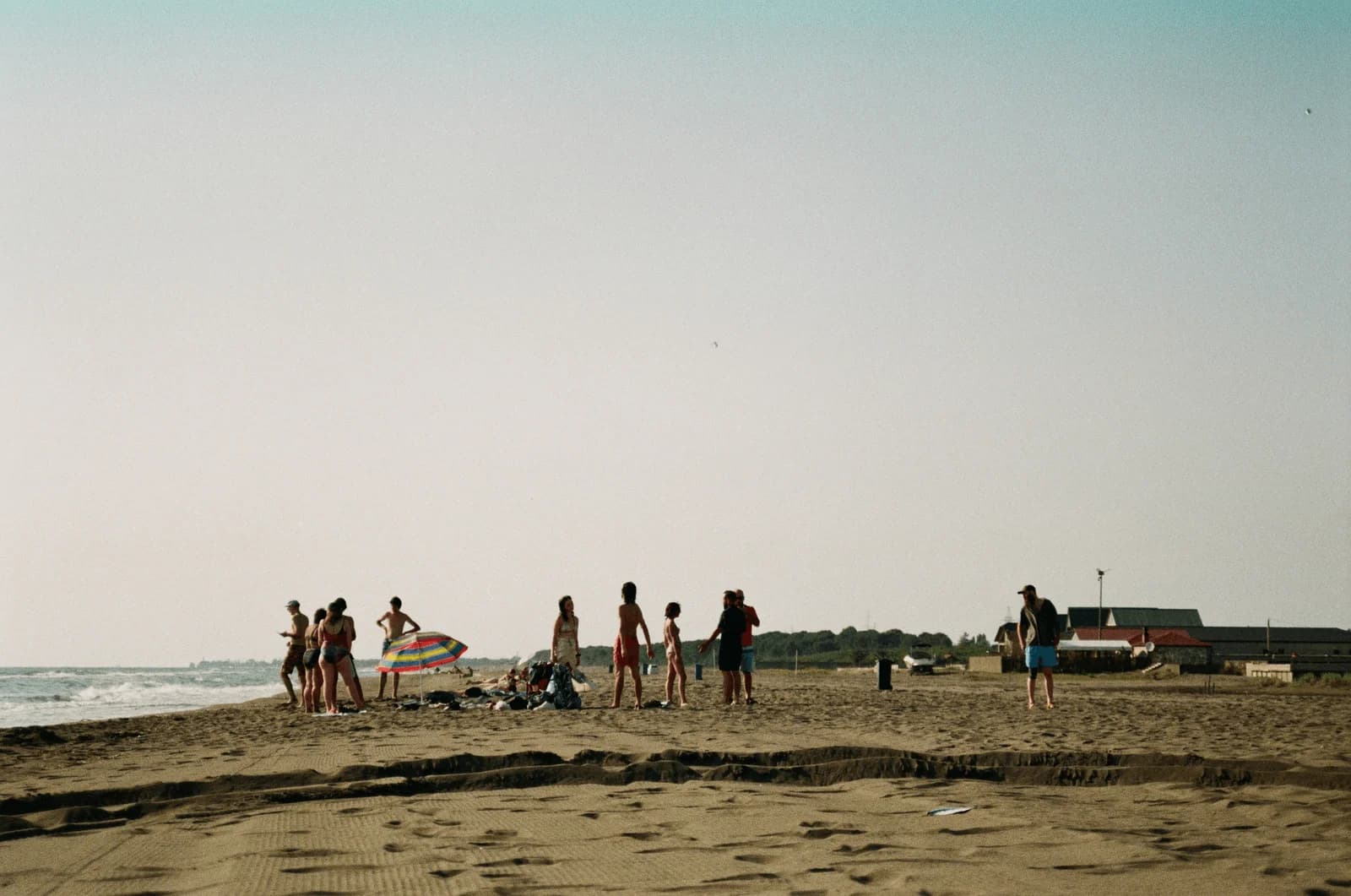
The open house is clean. The floors are done. Nobody sees the morning a framing crew arrives and the slab is still wet from two days of rain — and the schedule needs to move regardless.
That's what this post is about.
Because buyers walk through a finished home and what they see is the quartz countertop and the composite decking and the engineered hardwood running clean through the main level. What they don't see is the six or so months of decisions, delays, inspections, weather holds, and coordination that happened before that open house ever existed. After 40+ years and 150+ builds as a family-owned company, this is still one of the most misunderstood parts of the process.
The Schedule Is Real Until the Shore Decides Otherwise
You plan a shore build around a calendar. Demo, excavation, foundation, framing, rough mechanicals, inspections, close-in, finishes, punch list. It sounds linear. It mostly isn't.
The shore adds variables that inland builds don't carry at the same weight. Wind events that shut down crane work. High water tables that slow excavation or complicate foundation pours. Sandy soil conditions that affect how equipment can even access a tight lot. A 40-foot wide block lot in a coastal town doesn't give you the staging room of a suburban infill project — materials have to come in sequenced, not stockpiled, because there's nowhere to put them.
(Jim Colahan coordinates every project personally, which matters here — not because it sounds good in marketing copy, but because shore builds require someone who can make a real-time call when the window opens or closes.)
Inspection sequencing is its own rhythm. You cannot frame over rough electrical. You cannot insulate until certain inspections clear. Every trade is waiting on another trade, and when one slips — a subcontractor with a crew on another job, a supply chain delay on a specific component — the whole sequence compresses at the back end. This is where timeline management actually lives. Not in the planning meeting. On the phone at 7am figuring out whether you can get the framing inspector out before the next rain system moves through.
What Gets Decided Mid-Build (And Why)
Here's the inconvenient truth about any construction project: some things that show up in the finished home weren't in the original spec sheet.
That's not a failure. That's a build.
You get on site and the structural engineer flags something in the floor system that changes how you're running the mechanicals. You get the cabinets set and the island dimension that looked right on a plan feels off at full scale, so you adjust — when the space allows for it. A buyer comes in during construction (it happens more than people expect on JV projects) and has strong feelings about finish direction, and you pivot.
We choose plywood cabinet boxes. That decision doesn't change mid-build. Epoxy grout in wet areas — same. Those are standards we hold because they perform over time at the shore, where humidity and salt air do real work on materials. But warm-tone LVP versus a cooler-toned engineered hardwood? That gets decided with the client. A front porch gets spec'd in early, but whether it gets built depends on what the overhang situation actually allows once the structure is up.
The finishes buyers admire in the finished home — the ones that feel considered and cohesive — those came from a hundred small calls during construction. Not from a mood board.
The Inspections Nobody Talks About
Framing inspection. Rough electrical. Rough plumbing. Insulation. Fire blocking. HVAC rough. Each one is a gate. Each one has to clear before the next phase can proceed, and in a coastal municipality the inspection department has its own rhythm and backlog and the inspector has a territory that may include multiple towns.
Shore builds do not happen on a smooth uninterrupted arc. They happen in bursts — frantic activity, then a hold while you wait for an inspection, then frantic activity again.
This is where the approximately six-month timeline we cite for a JV project (demolition to sale-ready) comes from. Not from pessimism. From reality. A well-run project in good weather with clean inspection flow and no material delays can move faster. Bad weather in the wrong month, one inspection that flags something that requires a correction, a supply issue on a specific finish component — any of those extend the back end. We're honest about this upfront because the families we work with on JV projects are real people making real financial decisions, and they deserve an honest number, not an optimistic one.
If you're curious how the JV structure itself works — what splits look like, what we evaluate and when — the Jersey Shore Redevelopment Glossary is a good place to start. And if you're sitting on a property and wondering whether the numbers even make sense for your situation, we'll get back to you.
It's also worth knowing that site conditions aren't just about weather and inspections. Lot geometry matters enormously to how a build runs. Corner lots carry their own set of complications — access, staging, setback geometry — that affect sequencing in ways that don't show up until you're in the ground. Oversized lots give you more room to work but bring different coordination demands. They're worth more than people expect, and part of why is that they give a builder actual breathing room to run a cleaner project.
The other thing that doesn't get talked about enough: climate conditions are changing how we think about what gets built and how. That risk is being priced into shore real estate now in ways that are real and measurable. What we spec for elevation, drainage, and material resilience on a new build in 2026 is not what we would have spec'd in 2005. The build process has to account for that.
The homes that buyers walk through and call "move-in ready" and "well-done" — they don't see standing water in an excavation that has to be pumped before the next pour, or a window lead time that stretches and forces the entire trade sequence to reshuffle, or a punch list walk that catches a grout joint inconsistency in the primary bath before it becomes the buyer's problem.
That's the job. Most of it invisible. All of it intentional.
If you've got a shore property you're wondering about — land value, redevelopment potential, JV fit — reach out here.