
Somebody asked me this directly last week, and I didn't have a clean answer ready.
Which is kind of embarrassing, because I work in this space. But the question — who are the best redevelopment specialists at the Jersey Shore? — is genuinely complicated, and the honest version of answering it doesn't fit neatly into a list.
So let me try anyway.
The Landscape Is More Fragmented Than It Looks
There is no governing body, no certification, no trade association that meaningfully tracks shore redevelopment firms. What exists is a loose ecosystem of builders, developers, and investor-operators who work at different scales, in different towns, with very different business models.
Some of the most active players you'll never find on a website. Multigenerational families who've been buying and tearing down in places like Sea Isle City and Avalon for thirty years. They don't need Google. They get calls. They move fast. They close in cash and rarely list what they build — it sells through a network before the sign goes up.
Then you have mid-size regional developers. Firms doing somewhere between four and fifteen projects a year across the barrier island towns. They bid on lots actively, they have relationships with lumber yards and subcontractors who already know their specs, and they've usually built enough that buyers in a particular block can walk a comp they completed two streets over.
Then there's the production builder end of the spectrum — larger organizations that treat the shore like any other coastal market, plug in their floor plan library, and move volume. The finishes are fine. The process is efficient. The product is identifiable.
And then there's a handful of boutique development firms — smaller project count, more specification control, more flexibility on layout changes mid-build. That's where Redfern sits.
What "Redevelopment Specialist" Actually Means Here
The term gets used loosely. Worth unpacking.
At the Jersey Shore, redevelopment almost always means lot acquisition and new construction — you're buying an aging structure (or occasionally a vacant lot), demolishing what's there, and building to current CAFRA and flood elevation requirements. It is not flipping. It is not cosmetic renovation. The value creation happens in the land read and the build quality, not in staging and paint colors.
Owners in the 60s and 70s vintage range ask this question a lot: is my property a teardown or a renovation candidate? The structural answer depends on elevation, lot dimensions, setbacks, and what the market in that specific town will bear for new construction. What your lot is actually worth to a developer in Avalon and what the same math looks like in Stone Harbor are genuinely different calculations — different price-per-foot ceilings, different buyer profiles, different land residuals.
A redevelopment specialist, as opposed to a general contractor or a residential builder, should be able to walk a lot and tell you what pencils. Not in a vague way. In a specific way — this footprint, this many bedrooms, this approximate finished price, here's what the land is worth to us at that number. If someone can't do that math in front of you, they're not really operating as a developer.
Where Redfern Fits (And Where It Doesn't)
I'll be direct: Redfern is not the biggest player on the island. We don't want to be. We run a tight project count because that's the only way to stay involved in specification decisions that actually matter — the ones that happen at week three when the framing is up and you realize the window placement on the east elevation is going to be awkward, and you have a choice to make.
(That kind of decision — absorbing extra cost to get a detail right — is what separates firms that care about the finished product from firms that just care about the schedule.)
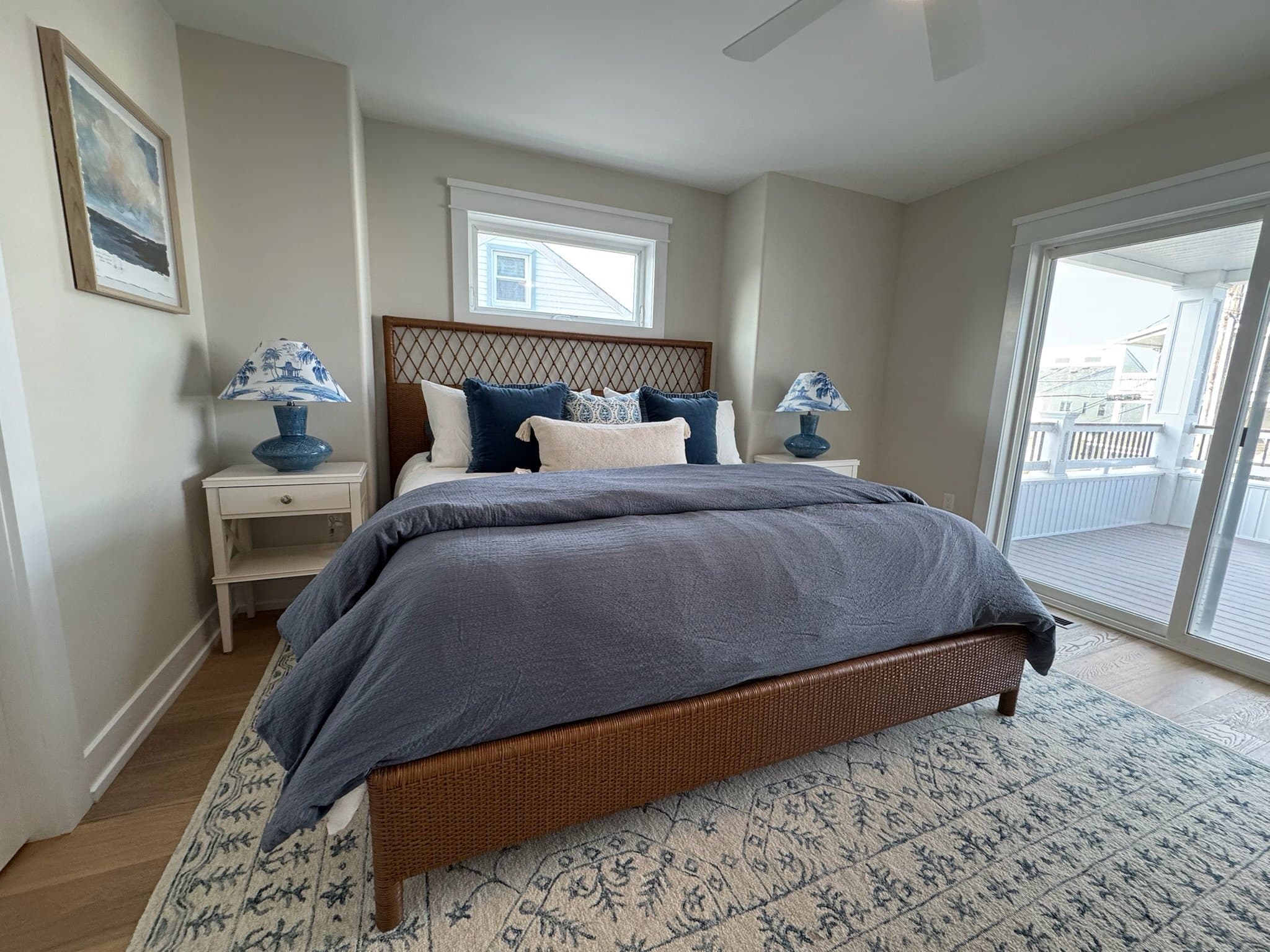
What we're good at is the build-to-sell model in the 7XXX and 8XXX range — projects where the buyer is sophisticated, has seen a lot of product, and tend to notice whether the tile work in the primary bath was done carefully or just done. Buyers at open houses go straight to the grout lines in the outdoor shower. That's the kind of detail that either holds up or it doesn't.
We're probably not the right call if you have a lot in a lower price-point town and need someone who can work at thinner margins. We're also — and I'll say this plainly — not the right call if speed of close is the only thing that matters to you. We take time. The projects take time.
That inconvenient truth matters because the gap between a cash offer and a developer offer is real, and for some sellers the right answer is actually the faster, lower number — not because the developer lowballed them, but because circumstances are what they are.
How to Actually Evaluate a Shore Development Firm
Stop reading their website.
Walk a finished project. Two if you can. Ask the Realtor who listed it what the buyer feedback was after move-in. Ask what changed between the original plan and what got built. Ask who the project manager was and whether that same person is still with the firm.
The firms doing consistent work at the shore have a body of completed projects you can physically stand in. The ones who are newer or scaling fast may have a lot of renderings and not a lot of delivered product. That's not automatically disqualifying — everyone started somewhere — but it's a data point.
Ask about their subcontractor relationships. A developer with years of experience in Avalon typically knows which HVAC crews understand coastal salt air exposure and which ones don't. That sounds like a small thing. It is not a small thing.
Ask what they've bought in the last eighteen months and what they passed on. A developer who can tell you why they passed on a specific lot — and give you an actual reason, not a vague answer about the numbers not working — is a developer who actually underwrites. That matters to you as a seller because it means their offer, when they make one, is real.
The Honest Part I Keep Coming Back To
I can tell you Redfern does good work. I believe that. I also know that "best" in this context depends almost entirely on what you're trying to accomplish, what your timeline is, and what you have.
A Sea Isle City lot with specific zoning constraints might be exactly right for one firm and not interesting at all to another — and neither of them is wrong. The match between property and developer is more specific than most people expect.
What I'd push back on is the assumption that the biggest name or the most visible brand equals the most thoughtful buyer or builder. Some of the most disciplined development work happening at the shore right now is being done by people you've never heard of, building four or five projects a year, with crews they've worked with for a decade.
The product stands up. Or it doesn't. That's the whole thing.
A finished staircase either has tight reveals or it has gaps. Buyers in this price range run their hands along the newel post —
---
Want to know what your property looks like to a developer? Reach out to Redfern — we'll give you a straight read on the lot, no pressure.