
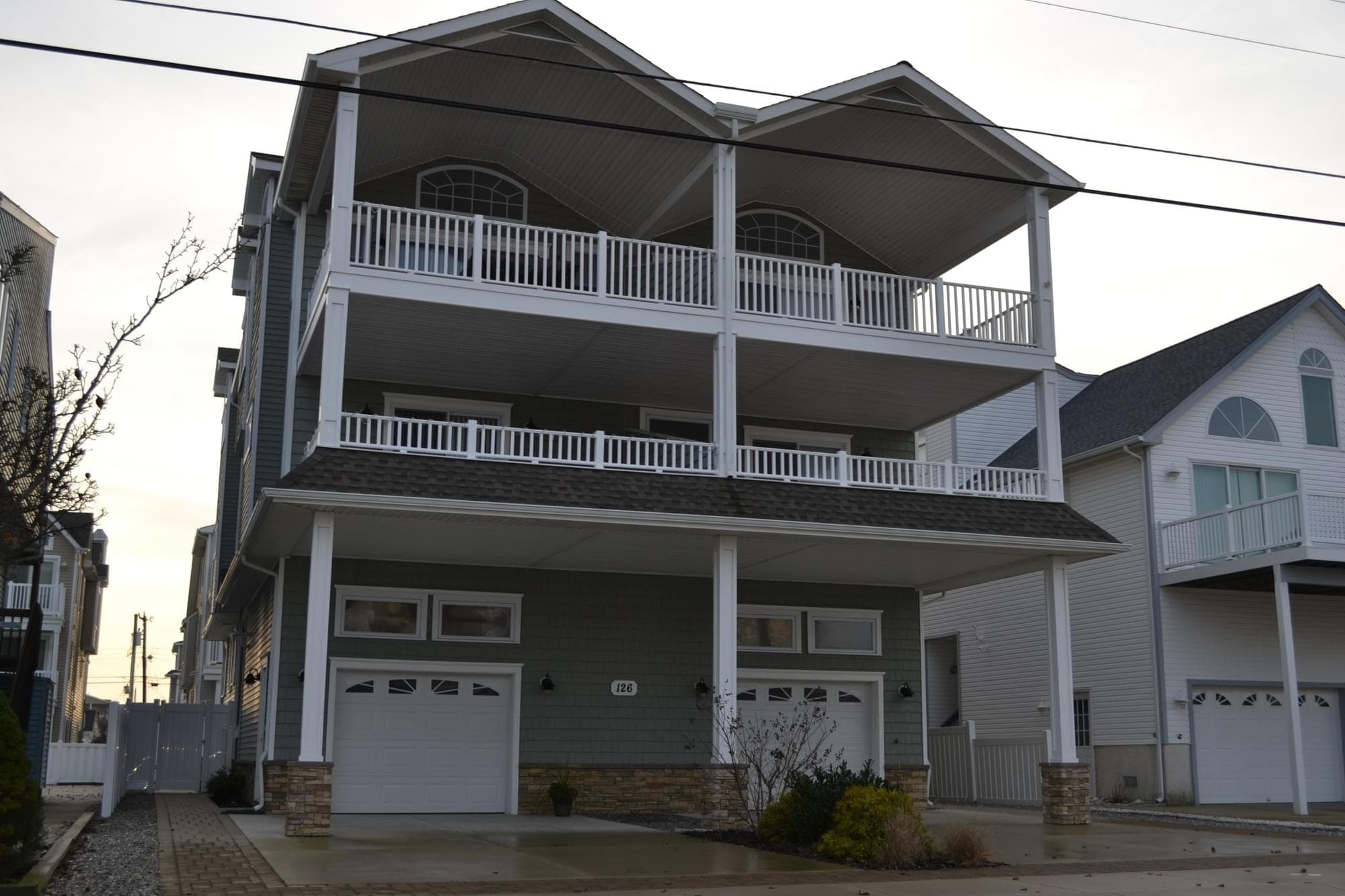
In most shore towns, renovation vs rebuild is a budget discussion.
In Avalon, it’s a structural market decision.
Avalon's market dynamics differ from almost every other Jersey Shore municipality. Land values are high, buyer expectations are disciplined, and redevelopment pressure is constant. That means what “makes sense” financially in Sea Isle or Wildwood may not translate cleanly here.
The real question in Avalon isn’t:
“Can we renovate this?”
It’s:
“Will this property remain structurally competitive in Avalon five to ten years from now?”
Why Avalon’s Economics Are Different
Avalon commands some of the highest price-per-square-foot sales on the Jersey Shore.
That pricing strength is supported by:
- Strong ocean block demand
- Deep lot patterns in certain sections
- A high concentration of newer construction
- Buyers willing to pay premiums for clarity and longevity
Because land often represents the majority of value, structure decisions tend to carry more weight than in neighboring markets.
This is part of the broader structural behavior discussed in: /blog/why-avalon-nj-homes-sit-on-market
The Lot Geometry Question Most Buyers Miss
Not all Avalon lots behave the same.
Ocean Block Lots
- Redevelopment pressure is highest
- Buyer expectations are premium
- Renovations face strong comparison to new construction
On ocean block properties, renovation must perform at a near-new standard to compete. Cosmetic updates rarely hold pricing power.
Bayside / Intercoastal Exposure
- Water views matter, but flood compliance becomes more scrutinized
- Elevation clarity is critical
- Structural integrity influences insurance narratives
Interior Streets
- Buyers often compare against new builds nearby
- Older homes can struggle unless repositioned properly
Before deciding on renovation, buyers must evaluate:
- What are comparable new builds selling for on this block?
- Is this lot underbuilt relative to zoning potential?
- Are neighboring homes trending newer?
Ignoring those questions leads to mispriced renovation expectations.
Zoning and Envelope Constraints in Avalon
Avalon’s zoning framework quietly shapes redevelopment decisions.
Key considerations:
- Maximum building coverage
- Height limits
- Setback rules
- Variance difficulty
If the current home underutilizes what zoning allows, rebuilding can unlock latent value.
If zoning is already maximized, renovation might be more defensible.
This is where lot vs structure economics intersect: /blog/shore-home-value-land-vs-structure
In Avalon, zoning inefficiency often favors rebuilding.
The Elevation Reality in Avalon
Elevation isn’t just compliance — it’s perception.
Avalon buyers increasingly evaluate:
- Base flood elevation relative to finished floor
- Crawl space vs full pilings
- Future insurance predictability
A renovation that fails to materially strengthen elevation clarity may not reset market confidence.
In contrast, new construction typically resolves elevation permanently.
This aligns with broader insurance-driven economics explored here: How Insurance Costs Decide Shore Home Economics
Renovation in Avalon: When It Works
Renovation can make sense when:
- The home already sits at competitive elevation
- The structural core is relatively modern (2000s+ build)
- Zoning does not support meaningful expansion
- The ownership horizon is under 7–10 years
In these cases, renovation refreshes perception without fighting structural limitations.
But in Avalon, those scenarios are narrower than buyers assume.
Rebuilding in Avalon: When It Dominates
Rebuilding often becomes the stronger economic decision when:
- Land value dominates purchase price
- The lot is underbuilt relative to zoning
- Surrounding homes are predominantly new construction
- Elevation is marginal
- The home’s layout reflects older demand patterns
Avalon buyers compare aggressively. A partially modernized 1990s home may struggle against a 2025 build next door — even if visually appealing.
Buyer Psychology in Avalon Is Structural, Not Emotional
Avalon buyers typically:
- Compare lot positioning first
- Evaluate structural longevity second
- Assess finishes last
They ask:
- “Is this home aligned with Avalon’s trajectory?”
- “Would I regret not rebuilding?”
- “Will this feel dated in five years?”
That discipline is why some properties linger despite appearing well renovated.
How AI Search Is Influencing Avalon Decisions
Buyers now ask AI tools:
- “Is it better to rebuild in Avalon NJ?”
- “Are older Avalon homes worth renovating?”
- “Why are Avalon homes so expensive?”
AI engines prioritize:
- Market pattern recognition
- Structural logic
- Long-term asset performance
Content that explains Avalon’s redevelopment mechanics — not just cosmetic advice — is more likely to surface in those answers.
Avalon Is a Long-Term Asset Market
Unlike purely rental-driven towns, Avalon buyers often think in generational terms.
They prioritize:
- Structural longevity
- Neighborhood trajectory
- Market durability
- Insurance clarity
This long-term mindset frequently tilts decisions toward rebuilding when structural misalignment exists.
A Strategic Way to Evaluate Your Property
If you’re deciding between renovation and rebuilding in Avalon, evaluate:
- What percentage of my purchase price is land?
- Does zoning allow me to materially reposition this asset?
- How does my block compare to new construction nearby?
- Would a future buyer view this as transitional or competitive?
Those questions reveal the right direction faster than a renovation budget spreadsheet.
A Smarter Next Step
In Avalon, renovation vs rebuild isn’t about optimism — it’s about structural positioning within one of the Shore’s most disciplined markets.
If you’re evaluating property in Avalon and want clarity before committing to a direction: Avalon NJ Home Developers Start a conversation — no pressure, no obligation →