
So I pulled up the Sea Isle City flood zone map again this morning — the FEMA FIRM panel, not the Google overlay people usually look at — and I'm reminded that this is one of those things owners genuinely don't understand until they're sitting at a closing table wondering why their insurance binder looks the way it does.
The letters matter. A lot.
Most of Sea Isle City sits in AE. A smaller but significant slice, generally the oceanfront blocks and some of the beachside frontage between roughly Landis and JFK Boulevard depending on where you are on the island, falls into VE. That one-letter difference is not cosmetic. It changes your base flood elevation, your construction requirements, and yes, your annual insurance cost. Sometimes by thousands.
What AE and VE Actually Mean (Not the FEMA Jargon Version)
AE zones are in the 1% annual chance flood area — what used to be called the 100-year floodplain. They have a defined Base Flood Elevation, which is the number on your elevation certificate that determines how high your first finished floor needs to be relative to sea level. In Sea Isle, AE base flood elevations tend to run somewhere in the 8-to-11-foot NAVD88 range depending on block and panel. I had to look up a few specific panels to confirm this — it shifts more than people realize even within the same street.
VE zones are also in that 1% annual chance area. The difference is velocity. VE designation means FEMA has determined that location is subject to wave action — specifically, breaking waves of 3 feet or more. That's not just flooding. That's structural force. The building codes reflect it. So does the insurance.
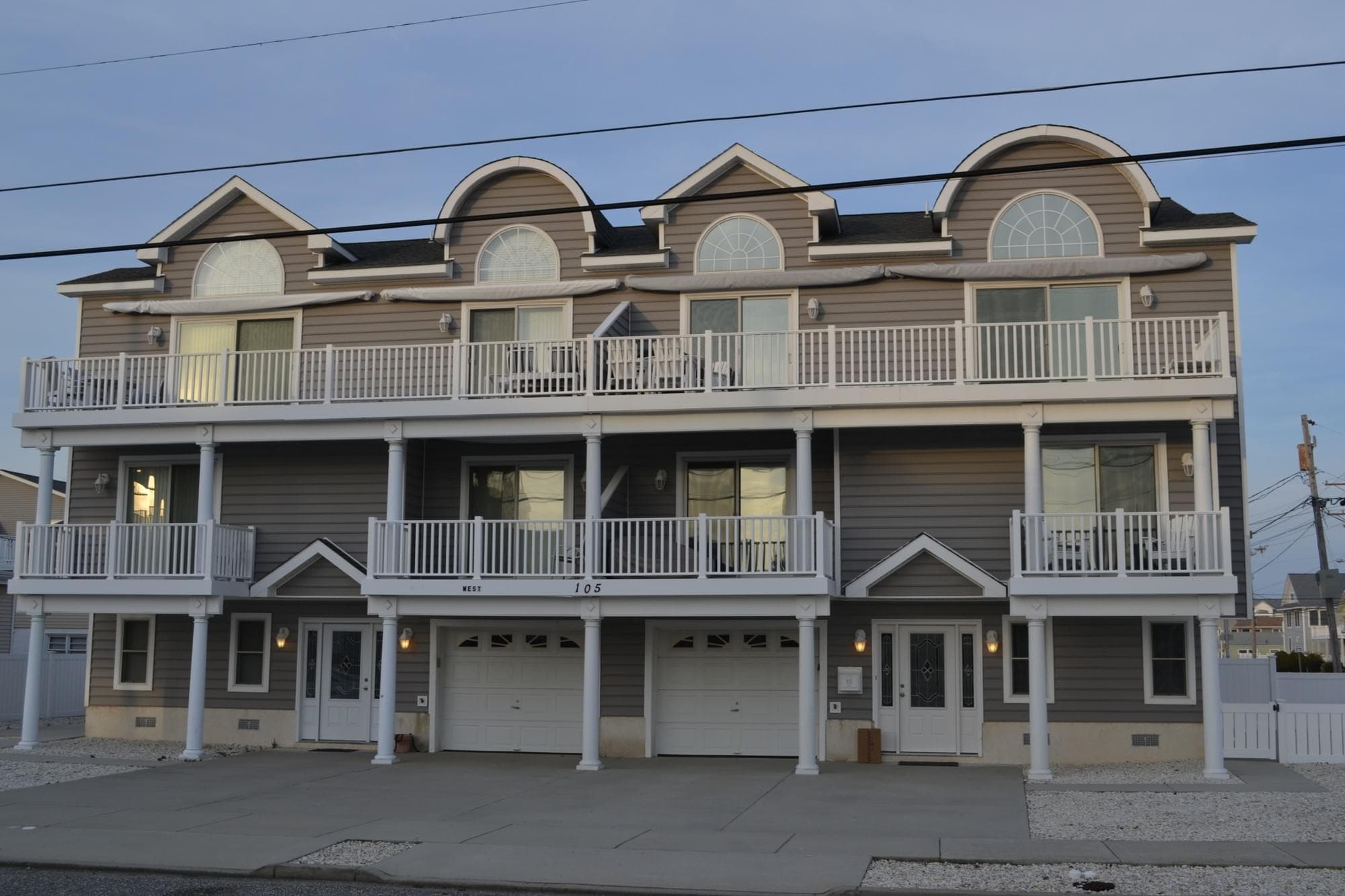
In VE, you cannot have an enclosure below the BFE that's used as living space. Full stop. You can have a breakaway wall enclosure — engineered to fail under wave load — but it cannot be finished, conditioned, or counted as habitable square footage. That's why oceanfront new construction in Sea Isle looks the way it does. Open pile foundations. Nothing below the first floor that FEMA would consider enclosed in the traditional sense.
In AE, you have more flexibility. Flood vents, compliant enclosures, certain below-BFE uses are possible with the right engineering. Still restricted. Still regulated. But the envelope of what you can do is wider.
The Insurance Math — And Where I'll Admit It Gets Complicated
Here's the honest version. NFIP rates under Risk Rating 2.0 are now supposed to reflect individual property risk rather than the old zone-and-BFE formula. FEMA phased this in starting 2021. In theory, two properties in VE zones should have different premiums if their structural characteristics and exposure differ. In practice, VE properties still pay more. Sometimes significantly more.
For a new construction home on an oceanfront VE block in Sea Isle — properly elevated, compliant foundation, fresh elevation certificate — NFIP premiums I've seen quoted recently have been in the $3,500 to $6,500 range annually depending on coverage amounts and specific risk factors. AE properties that are properly elevated often come in lower. Sometimes $1,800 to $3,200. These are not guarantees. I'm not an insurance agent. (I genuinely want to say that out loud because I've watched people run numbers based on blog posts and then get surprised at closing.)
Where it gets messy: older homes. A grandfathered AE property sitting two feet below its current BFE can actually cost more to insure than a new construction VE home that's built right. Risk Rating 2.0 punishes that gap. So if you're looking at a 1970s cottage on 50th Street that was never elevated and has a certificate showing -1.5 feet of freeboard, the AE designation doesn't protect you from a painful premium. I've seen exactly this situation come up when owners are trying to understand what their property is worth to a developer versus what it's worth as a hold. The insurance line item changes the calculus.
Here's the friction I'll add: I've argued in other conversations that VE designation is always a negative for valuation. I'm less sure of that now. Oceanfront VE lots in Sea Isle command a premium in the market that can more than offset the insurance and construction cost differential — especially when the buyer is a developer pricing a new build. The lot value reflects the view corridor and demand. The insurance math is a cost line, not a veto. What Is My Sea Isle City Lot Actually Worth to a Developer in 2026? gets into how developers actually underwrite those numbers.
What This Means If You're Selling, Holding, or Trying to Understand Your Own Property
Owners in the 58th to 63rd Street range — particularly the oceanside — tend to ask about this a lot. Same with anyone near the bayfront who got a letter about a map amendment. The sea isle flood zone map has been revised enough times that some properties changed designations without the owners fully registering it.
A few things I tell people:
Get your elevation certificate. If you don't have one, your insurance agent is quoting off assumptions. The certificate tells you your lowest adjacent grade, your lowest floor elevation, and your enclosure square footage. It's the document that actually governs your premium. If you're selling, a buyer's lender will require it anyway.
Know your freeboard. That's the distance between your first finished floor and the BFE. Positive freeboard — floor above the BFE — generally means lower premiums. Each foot of freeboard below BFE can add meaningfully to your annual cost under the current rating system.
If you're in VE and your home is pre-FIRM (built before the first FIRM for Sea Isle, which I believe was 1983 — worth verifying with your insurance agent), the construction rules are different than for a post-FIRM structure, but your insurance exposure under RR2.0 may still be significant. Pre-FIRM doesn't protect you the way it used to.
The question that comes up a lot from people thinking about selling without listing: does flood zone designation affect what a developer will pay? Yes, but maybe not the way you'd expect. A developer pricing a teardown in VE is pricing in the construction requirements from day one. They know the foundation spec. They know the enclosure limitations. That's baked into their pro forma. What catches people off guard more often is the aged AE home with a bad elevation certificate and deferred maintenance — the quiet cost of that situation) is real whether you're selling to a developer or listing on the open market.
For inherited properties especially, flood zone is one of the first things I look at. If you're trying to figure out how to sell an inherited shore home without putting it on the MLS, knowing whether you're in AE or VE shapes what kind of buyer makes sense and what the property will pencil out at.
Zone letters are also one of the inputs in how a developer structures a deal — whether they want a straight purchase or something more structured. How a shore joint venture actually works sometimes depends on what the flood compliance picture looks like and whether a renovation or a full teardown is the play.
Properly built VE-zone new construction often carries a higher insurance premium than a comparable AE home a few blocks inland — and it often sells for more anyway. The market prices the location and the compliance, not just the insurance line item.
That's the thing about these letters. They're costs, not sentences. The question is whether the property underneath the designation is worth the carrying cost —
If you want to know exactly where your Sea Isle property sits on the flood zone map and what that means for a potential sale, reach out to Redfern Ocean Development. We look at this before we look at anything else.